Spindle failure rarely happens without warning. The signs appear early — subtle at first, then progressively more aggressive — and most operators dismiss them until production halts and replacement costs hit. At Dynamic Balancing Technologies, we’ve spent decades helping manufacturers in Grand Rapids, MI, and surrounding industrial regions catch these warning signs in time. With ISO-compliant precision balancing, NIST-traceable instrumentation, FFT vibration diagnostics, and 24-hour emergency on-site service, we turn potential catastrophic failures into routine corrections. This guide covers the top five warning signs that your spindle needs precision balancing services immediately, why each matters, and what actions protect your equipment, your tooling, and your bottom line.
Why Ignoring Spindle Imbalance Leads to Costly Production Damage
Spindle imbalance is one of the most expensive problems in manufacturing, partly because it works silently. A microscopic mass distribution error you cannot see produces forces that compound shift after shift, stealing tool life, eroding bearings, and degrading the parts you ship. At Dynamic Balancing Technologies, we routinely meet customers who dismissed early warning signs for weeks before unplanned downtime forced their hand. By that point, the cost of correction has multiplied many times over what proactive balancing would have required.
Catching imbalance early through professional precision spindle balancing services is the lowest-cost path to extending equipment life. A small vibration today becomes bearing failure tomorrow and full spindle replacement next month if left untreated. Our team helps Michigan manufacturers and customers across our wider service region turn these silent threats into routine maintenance events, protecting production schedules, customer commitments, and the substantial capital tied up in high-speed rotating equipment across the shop floor.
The Top 5 Warning Signs Your CNC Spindle Needs Precision Balancing
At Dynamic Balancing Technologies, we see the same five warning signs repeatedly during initial customer assessments. Every maintenance team should treat the following pre-failure checklist as a reason to investigate immediately, not later, before damage compounds.
Warning Sign #1 — Excessive Vibration and Abnormal Spindle Noise
Abnormal vibration is the clearest sign your spindle is out of balance. Operators describe it as a low hum, a high-pitched whine, or a noticeable shake during high-RPM cuts. Our team uses FFT vibration analysis to confirm whether IPS (inches per second) or mm/s amplitude readings exceed acceptable thresholds, isolating unbalance from misalignment, bearing defects, or resonance with measurable accuracy.
Warning Sign #2 — Tool Chatter and Degraded Surface Finish
Spindle imbalance often shows up in the part before it shows up on a vibration meter. Chatter marks across machined surfaces, ripple patterns, and unexpectedly poor finishes are classic symptoms our team connects directly to spindle runout and unbalance. Once Dynamic Balancing Technologies completes precision correction, surface finish quality consistently returns and chatter disappears across both roughing and finishing operations.
Warning Sign #3 — Dimensional Drift and Rising Scrap Rates
When parts that ran in spec last week start drifting at the QA bench, spindle imbalance is often the hidden cause. Micron-level tolerance drift, creeping rejection rates, and inconsistent repeatability all point to unbalance stealing accuracy from your spindle. Our precision balancing restores the tight, predictable tolerances production runs require, eliminating expensive scrap before it accumulates on the shop floor.
Warning Sign #4 — Premature Bearing Wear and Spindle Overheating
Unbalanced cyclic loads punish angular contact bearings far beyond their rated service life. Heat at the spindle nose, lubrication breakdown, and bearing roughness during operation are early signals of accelerated wear. At Dynamic Balancing Technologies, we eliminate the forces driving this damage, helping manufacturers extend bearing life and avoid the much larger expense of full spindle rebuild or emergency replacement work.
Warning Sign #5 — Reduced Tool Life and Frequent Insert Breakage
Vibration shortens carbide tool life, increases insert chipping, and inflates per-part tooling cost in ways most shops never trace back to the spindle. If your team is replacing inserts faster than tool data sheets predict, spindle imbalance is a likely culprit. After our precision correction, customers consistently report longer tool life and reduced consumable spend across production runs.
How High RPM Amplifies Spindle Imbalance and Accelerates Failure
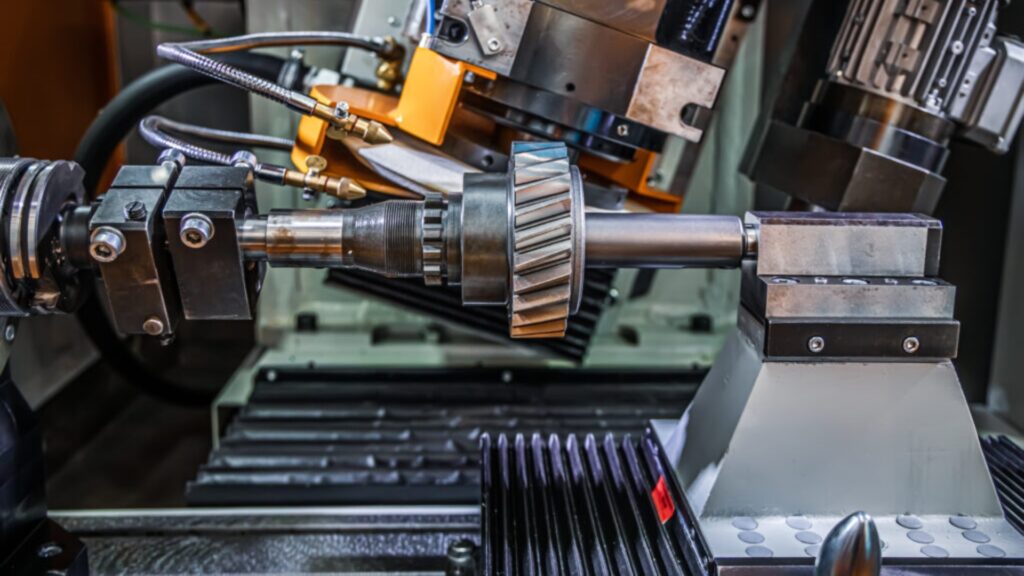
The physics of unbalance work against you at high RPM. Centrifugal force scales with the square of rotational speed, so a microscopic imbalance that goes unnoticed at 5,000 RPM becomes a destructive force at 20,000 RPM and beyond. This exponential amplification is exactly why warning signs that look minor on a low-speed machine turn into rapid failure cascades on high-speed CNC spindles, grinding spindles, motorized spindles, and precision rotors used across production environments.
At Dynamic Balancing Technologies, we balance components up to 250 pounds at operating speeds of 20,000 RPM and beyond, capturing imbalance under real-world conditions rather than at reduced test speeds. This matters because high-speed imbalance behaves differently than low-speed imbalance. Resonance shifts, harmonics appear, and bearing loads change dramatically. Our diagnostic-first approach identifies how each warning sign behaves at actual operating speed before we apply correction, ensuring the fix lasts.
The True Cost of Delayed Spindle Balancing for Manufacturers
The cost of delaying precision spindle balancing is rarely a single number — it’s a compounding series of smaller losses that add up faster than most maintenance teams expect. Scrap parts pile up on the QA bench. Tool consumable costs climb without explanation. Bearings fail months ahead of schedule. Production schedules slip. Customer delivery commitments suffer. By the time a spindle finally fails outright, the financial damage has been accumulating quietly for weeks across multiple cost centers.
The alternative is straightforward and far less expensive. A few hours of professional precision balancing from Dynamic Balancing Technologies routinely resolves issues that, left untreated, would have required full spindle replacement, overnight freight on rebuild parts, and extended unplanned downtime. For manufacturers running aerospace, automotive, or machine tool operations, proactive balancing is not just maintenance — it’s risk management for production-critical equipment that keeps revenue flowing without unexpected interruption.
Our Precision Spindle Balancing Capabilities and ISO Standards
At Dynamic Balancing Technologies, our balancing capabilities are built on internationally recognized standards and audit-ready measurement traceability — the same technical foundation aerospace, automotive, and machine tool customers require for their most demanding work.
ISO G 1.0 and ISO G 2.5 Balance Grade Capability
We balance to ISO G 2.5 and the tighter ISO G 1.0 standards, depending on your application’s vibration sensitivity. ISO G 2.5 covers most general machine tool spindles, while ISO G 1.0 is required for grinding spindles and ultra-high-precision rotors. Dynamic Balancing Technologies certifies every job to internationally recognized balance quality standards, giving manufacturers the documentation needed for quality reviews and compliance.
NIST-Traceable Equipment and FFT Vibration Diagnostics
Every measurement we record is captured on NIST-traceable instruments, ensuring your balance results are fully defensible during quality reviews. Our FFT (Fast Fourier Transform) vibration diagnostics break down frequency content to isolate unbalance from misalignment, bearing defects, and resonance — letting our team correct the actual root cause rather than masking symptoms with trial weights or operator guesswork.
Component Capacity, RPM Range, and Plane Correction
Our balancing equipment handles components up to 250 pounds at operating speeds of 20,000 RPM and beyond, covering CNC spindles, tool holders, rotors, and electric motor armatures. We perform both single-plane and dual-plane correction, selecting the right approach based on rotor geometry, length-to-diameter ratio, and the application’s vibration sensitivity to deliver precision results that hold up in production.
Onsite and In-Shop Precision Spindle Balancing: Our Rapid Response Process
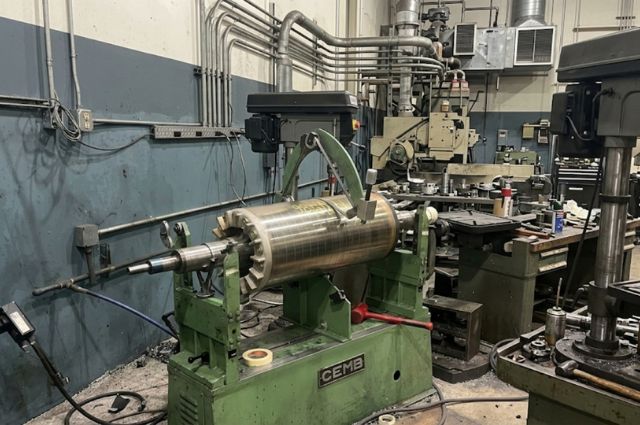
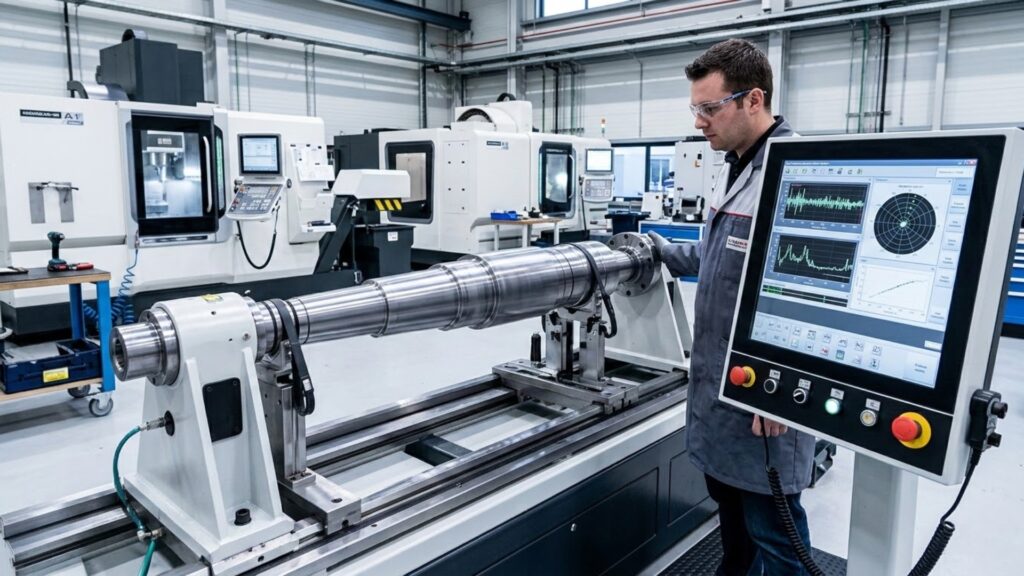
Our spindle balancing process begins with an initial assessment and vibration analysis, performed either at your facility or in our laboratory. We then identify the root cause using FFT spectrum analysis, confirming whether unbalance, misalignment, or bearing damage is driving the vibration. Once unbalance is verified, we perform precision correction at the spindle’s actual operating speed, often without requiring full machine disassembly — saving you significant production downtime and avoidable disruption.
After correction, we capture before-and-after vibration plots to verify measurable improvement, and we issue a comprehensive balance report and certificate suitable for quality audits, performance benchmarking, and ongoing maintenance records. For time-critical situations, Dynamic Balancing Technologies offers 24-hour emergency onsite balancing, dispatching technicians and portable instrumentation to your facility so production resumes with minimal disruption to schedules and customer commitments across multiple industries we serve.
Industries Where Early Spindle Balancing Is Mission-Critical
Some industries cannot tolerate spindle vibration under any circumstances. Aerospace and defense suppliers depend on rotational accuracy for components where a missed tolerance can mean a rejected part or a failed audit. Automotive manufacturers running tight production cycles cannot afford spindle-driven downtime. Machine tool builders, tool and die shops, and CNC machining centers rely on Dynamic Balancing Technologies to keep their high-speed spindles operating at certified balance grades and within audit-ready documentation standards.
Beyond these core sectors, our team also supports power generation, paper mills, steel mills, ethanol plants, heat treating operations, textile facilities, and robotics applications where rotating equipment runs continuously at high speed. We balance electric motors, fans, pumps, armatures, rotors, and tool holders for customers across the industrial base. Wherever rotating mass and high RPM intersect, the warning signs of imbalance demand the same urgent, expert response from a trusted partner.
Frequently Asked Questions About Spindle Warning Signs and Precision Balancing
How do I know if my spindle is actually out of balance?
Spindle imbalance reveals itself through a combination of abnormal vibration, audible noise, surface finish defects, and rising scrap rates. At Dynamic Balancing Technologies, we use FFT vibration analysis on NIST-traceable equipment to provide the definitive diagnosis, isolating unbalance from misalignment, bearing damage, or resonance.
Can spindle warning signs go away on their own?
No. Imbalance never self-corrects — it only worsens with continued operation. Ignoring early warning signs allows centrifugal forces to compound, leading to bearing failure, scrap parts, and eventual spindle replacement at significantly higher cost than early professional precision balancing would have required.
What RPM makes spindle balancing most urgent?
Any spindle operating above 10,000 RPM benefits from professional balancing, but at 20,000 RPM and beyond, precision dynamic balancing becomes essential. At those speeds, even microscopic imbalances generate large centrifugal forces that quickly damage bearings, ruin tool life, and degrade surface finish noticeably.
Can you balance my spindle onsite without removing it from the machine?
Yes, in most cases our team can balance your spindle onsite without full removal. Dynamic Balancing Technologies uses portable balancing systems to analyze and correct imbalance directly on your equipment, minimizing downtime for facilities throughout our service region across multiple states.
How long does precision spindle balancing take?
Most spindle balancing jobs are completed within a few hours, depending on the spindle type and severity of unbalance. For emergency onsite service, our team often delivers same-day or next-day turnaround, getting your equipment back into production fast with minimal operational disruption to your shop.
Don’t Wait Until Damage Occurs — Partner with Dynamic Balancing Technologies
The five warning signs covered above are not random — they are the early-stage signals of impending spindle failure, and they always demand action. At Dynamic Balancing Technologies, decades of experience, ISO G 1.0 and G 2.5 capability, NIST-traceable instruments, FFT diagnostics, and 24-hour emergency onsite service stand ready to help. Request a free phone consultation today and let our team identify whether your spindle needs precision balancing before warning signs become costly damage.