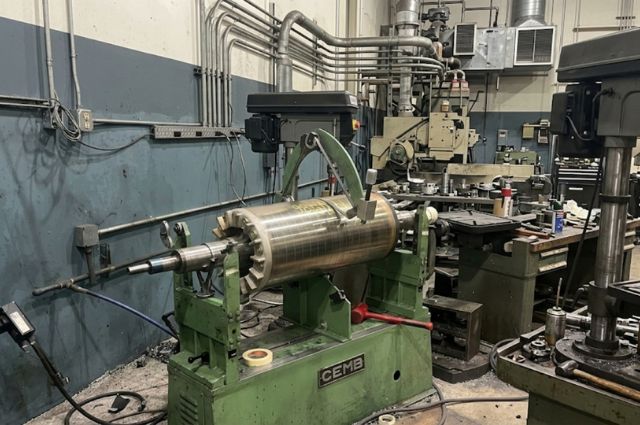
Spindle imbalance rarely shows up as a line item on any invoice, yet it quietly drains profitability across nearly every industrial operation that runs high-speed rotating equipment. At Dynamic Balancing Technologies, we’ve spent decades helping manufacturers in Grand Rapids, MI and surrounding industrial markets turn these invisible losses into measurable savings. With ISO-compliant precision balancing, NIST-traceable instrumentation, FFT vibration diagnostics, and 24-hour emergency on-site service, we expose the full financial impact of unaddressed imbalance and eliminate it at the source. This comprehensive guide breaks down the direct, indirect, and cascading costs of ignored spindle balancing issues — and shows industrial businesses how proactive precision balancing protects the bottom line.
Why Spindle Imbalance Is the Most Underestimated Cost in Industrial Manufacturing
Spindle imbalance is the most underestimated cost in industrial manufacturing because it never appears as itself. It hides inside scrap reports, tool consumable budgets, downtime logs, energy bills, and capital expenditure requests for early bearing replacements. At Dynamic Balancing Technologies, we routinely meet finance teams who track all of these line items but never connect them back to a single root cause: an unbalanced rotating assembly silently amplifying its damage with every shift the machine runs.
This disconnect is exactly why hidden costs grow unchecked across so many industrial operations. Without a unified diagnosis, maintenance teams chase recurring symptoms while finance teams approve increasingly expensive replacements. Our team brings these scattered costs into focus, applying professional precision spindle balancing services that address the underlying issue rather than its endless downstream effects. The rest of this guide walks through every category of hidden cost and shows how Dynamic Balancing Technologies eliminates them.
The Direct Hidden Costs of Ignoring Precision Spindle Balancing
At Dynamic Balancing Technologies, we routinely help industrial businesses identify the four direct cost categories that grow fastest when spindle imbalance goes unaddressed — costs that hit the P&L immediately and visibly across the operation.
Premature Bearing Failure and Spindle Replacement Costs
Cyclic forces from imbalance shorten the angular contact bearing life dramatically and accelerate lubrication breakdown. A single spindle rebuild or full replacement can easily reach five figures, plus overnight freight on critical components. The cost of preventive precision balancing performed by Dynamic Balancing Technologies on a regular cadence is a small fraction of what any one of those reactive repairs would cost.
Production Downtime and Lost Manufacturing Output
Unplanned downtime from spindle failure stalls entire production lines, triggers overtime, and forces emergency freight on replacement components. Every hour of lost output carries real financial weight on the P&L. Our onsite balancing service prevents this scenario before it begins, and our 24-hour emergency response ensures minimal disruption when industrial customers face sudden vibration problems they cannot wait to address.
Scrap Parts, Rework, and Rising QA Rejection Rates
Spindle imbalance shows up as chatter marks, micron-level dimensional drift, and inconsistent surface finish — quietly inflating scrap rates and rework hours across the production floor. Most teams blame tooling or material first, but unbalance is often the real cause. Our precision correction restores tight tolerances and predictable repeatability, eliminating this hidden loss before it consumes another shift.
Accelerated Tool Wear and Inflated Consumable Spend
Vibration shortens carbide tool life, increases insert breakage, and drives consumable budgets above projections every quarter. Most maintenance teams never trace this back to the spindle. After a single round of professional precision balancing, customers consistently report longer tool life, fewer insert replacements, and a measurable reduction in per-part tooling cost across both short and long production runs.
The Indirect Hidden Costs Industrial Businesses Rarely Calculate
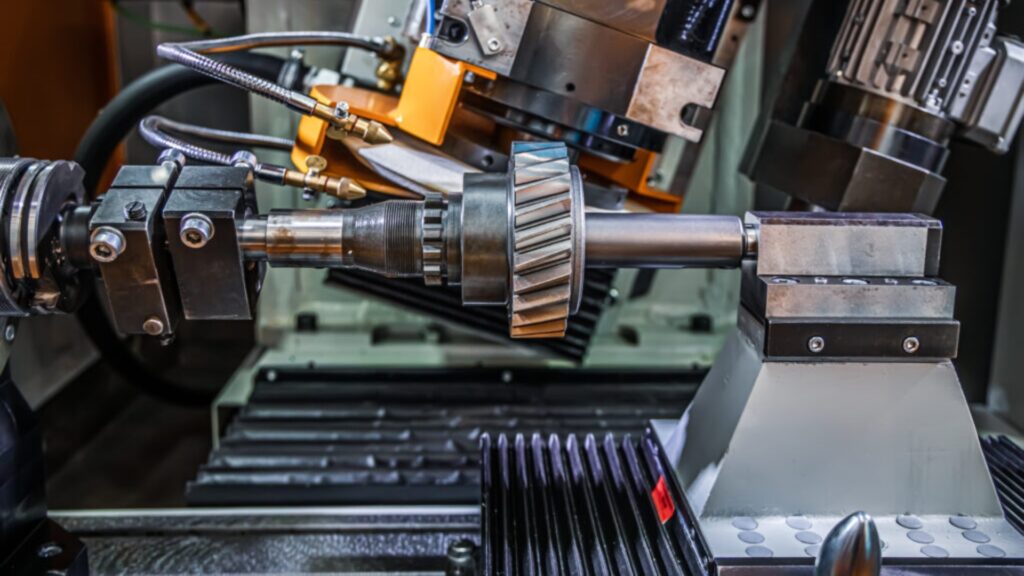
Beyond the direct costs, spindle imbalance creates a second tier of expenses that almost never get measured. Unbalanced rotating equipment draws more electrical current to overcome vibration and friction, raising energy bills continuously. Missed delivery commitments damage customer relationships and threaten contract renewals. Quality issues that slip past internal QA reach end customers, eroding brand reputation. At Dynamic Balancing Technologies, our High Speed Precision Spindle Balancing services routinely help industrial businesses uncover these indirect costs that finance teams rarely connect to the spindle itself.
The indirect cost picture also includes audit findings for industries with strict documentation requirements, expanded labor cost as maintenance teams chase recurring symptoms, and the slow loss of production capacity as imbalance forces operators to slow feeds and speeds to compensate. Our ISO-compliant balancing process and comprehensive balance reports give industrial customers the documentation they need for quality reviews while eliminating the operational drag that invisible imbalance imposes on production output.
How High RPM Operations Multiply Every Hidden Cost
The physics of unbalance work against you exponentially at high RPM. Centrifugal force scales with the square of rotational speed, so a microscopic imbalance that goes unnoticed at 5,000 RPM becomes destructive at 20,000 RPM and beyond. Every cost category we have covered — bearing wear, scrap, tool consumables, downtime — accelerates dramatically as spindle speeds rise. High-speed operations carry the highest financial exposure to ignored spindle imbalance, often by an order of magnitude over slower equipment.
At Dynamic Balancing Technologies, we balance components up to 250 pounds at operating speeds of 20,000 RPM and beyond, capturing imbalance under real-world conditions rather than at reduced test speeds. This matters because high-speed imbalance behaves differently than low-speed imbalance — resonance shifts, harmonics appear, and bearing loads change substantially. Our diagnostic-first approach identifies how imbalance behaves at actual operating speed, ensuring corrections deliver lasting financial savings rather than temporary symptom relief.
Cascading Equipment Damage: How Imbalance Spreads Through Your Plant
An unbalanced spindle does not damage only itself. Vibration travels through the machine frame into surrounding bearings, motors, gearboxes, fans, pumps, and connected drivetrains, quietly weakening every rotating asset within reach. One neglected imbalance can trigger a chain of secondary failures across the production line, with each replacement adding its own repair bill, its own downtime, and its own missed delivery. The full plant-wide cost of one unaddressed spindle frequently exceeds the cost of the spindle itself.
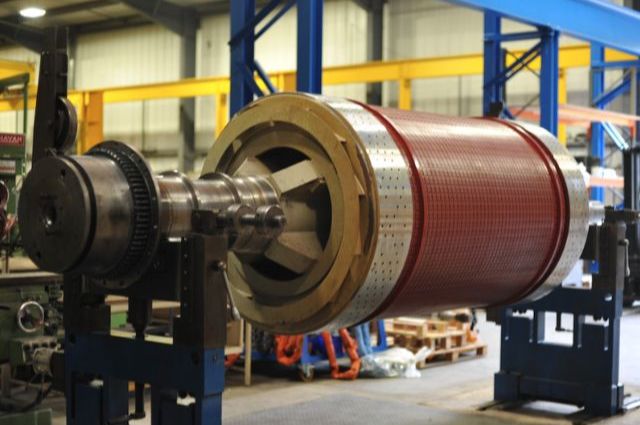
Our broader expertise reflects this reality. Beyond high-speed spindles, Dynamic Balancing Technologies balances electric motors, fans, pumps, armatures, rotors, and tool holders for industrial customers across multiple sectors. We treat imbalance as a plant-wide reliability issue, not a single-component problem. Regular precision balancing protects your entire fleet of rotating equipment, prevents cascading failures from spreading, and preserves the engineered design intent of every machine on your shop floor for many more service years ahead.
Our Precision Spindle Balancing Capabilities That Eliminate Hidden Costs
At Dynamic Balancing Technologies, our balancing capabilities are built on internationally recognized standards and audit-ready measurement traceability — the technical foundation that turns hidden costs into measurable savings for industrial businesses across every sector we serve.
ISO G 1.0 and ISO G 2.5 Balance Grade Certification
We balance to ISO G 2.5 and the tighter ISO G 1.0 standards, depending on your application’s vibration sensitivity. ISO G 2.5 covers most general machine tool spindles, while ISO G 1.0 is required for grinding spindles and ultra-high-precision rotors. Dynamic Balancing Technologies certifies every job to internationally recognized balance quality standards, giving industrial customers the documentation they need for quality reviews.
NIST-Traceable Equipment and FFT Vibration Diagnostics
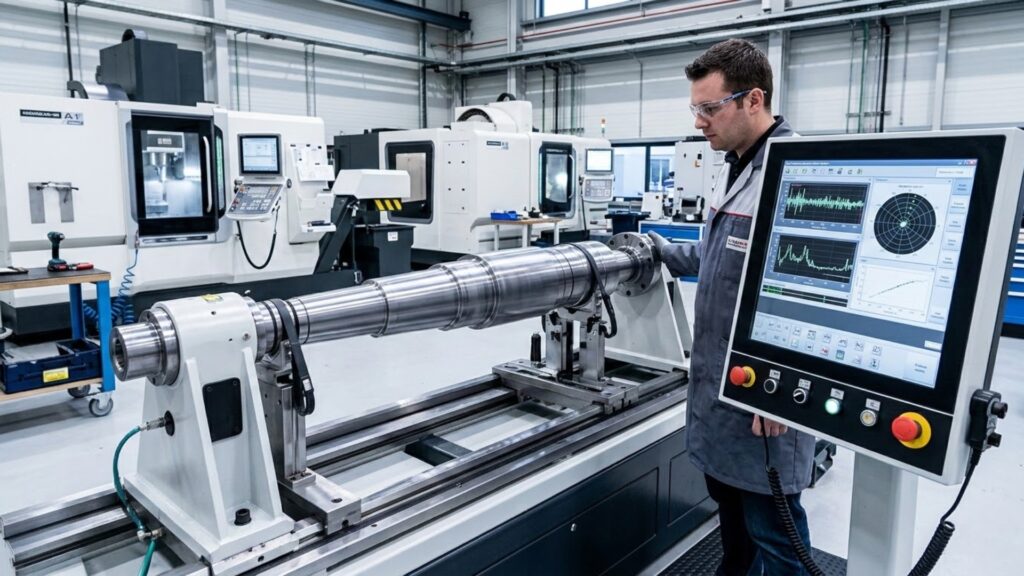
Every measurement we record is captured on NIST-traceable instruments, ensuring your balance results are fully defensible during quality reviews. Our FFT (Fast Fourier Transform) vibration diagnostics break down frequency content to isolate unbalance from misalignment, bearing defects, and resonance — letting our team correct the actual root cause rather than masking symptoms with trial weights or operator guesswork.
Component Capacity, RPM Range, and Plane Correction
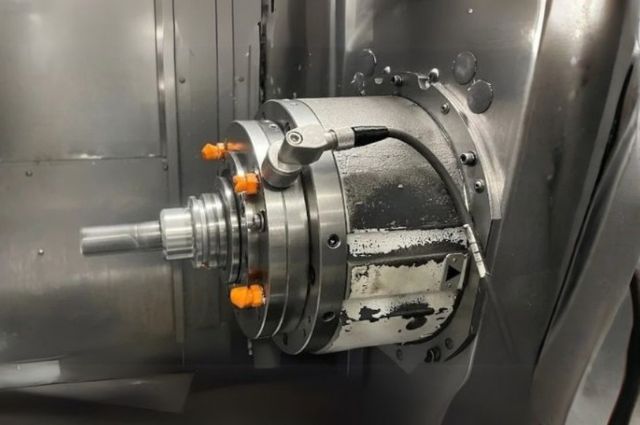
Our balancing equipment handles components up to 250 pounds at operating speeds of 20,000 RPM and beyond, covering CNC spindles, tool holders, rotors, electric motor armatures, and other rotating components. We perform both single-plane and dual-plane correction, selecting the right approach based on rotor geometry, length-to-diameter ratio, and the application’s vibration sensitivity for lasting results.
How Predictive Maintenance Programs Stop Hidden Costs Before They Start
Reactive maintenance pays the full price of every failure. Predictive maintenance pays a small fraction of that and catches imbalance trends long before damage compounds. At Dynamic Balancing Technologies, our predictive maintenance approach starts with a baseline vibration analysis on new installs, followed by scheduled monitoring of high-speed machinery, hot-spot identification, and trend documentation. This shift from chaotic firefighting to planned correction is the single highest-ROI maintenance decision most industrial businesses can make this year.
Scheduled balancing also turns an unpredictable repair cycle into a budgeted maintenance line item, giving plant managers and finance teams something they can actually plan around. Every service we deliver includes a complete report featuring FFT vibration plots, balance correction data, and a comprehensive balance certificate. This documentation is fully suitable for quality audits, performance benchmarking, internal maintenance records, and the cost-justification reviews that secure ongoing investment in plant reliability.
Frequently Asked Questions About the True Cost of Spindle Balancing
What does spindle imbalance actually cost my business each year?
The cost is rarely a single number — it accumulates across scrap, tool consumables, downtime, energy waste, and premature bearing replacement. Dynamic Balancing Technologies helps customers quantify these scattered losses, trace them back to imbalance, and convert them into measurable annual savings through professional precision correction.
Is professional precision balancing really cheaper than reactive repair?
Yes. A few hours of preventive precision balancing routinely costs a small fraction of full spindle replacement, emergency freight, and unplanned downtime. For most industrial businesses, scheduled balancing through Dynamic Balancing Technologies is one of the highest-ROI maintenance decisions they can make in any given year.
How quickly do the hidden costs of imbalance accumulate?
Costs begin compounding the moment imbalance starts. Within weeks, scrap rates rise, tool life shortens, and bearing wear accelerates. By the time a spindle finally fails outright, the financial damage has been growing silently for some time across multiple cost centers and budgets.
Does spindle imbalance affect equipment beyond the spindle itself?
Yes. Vibration travels through machine frames into surrounding bearings, motors, gearboxes, and connected components. At Dynamic Balancing Technologies, we treat imbalance as a plant-wide reliability issue, not a single-component problem, protecting your entire fleet of rotating equipment over time.
Can precision balancing reduce my energy costs?
Yes. Unbalanced rotating equipment draws more electrical current to overcome vibration and friction. Restoring proper balance continuously reduces energy waste, adding another quiet but real saving on top of the more visible operational benefits our industrial customers receive after professional precision balancing.
Stop Paying the Hidden Cost: Partner with Dynamic Balancing Technologies
Spindle imbalance is one of the largest hidden cost drivers in industrial manufacturing — and one of the most easily eliminated with professional intervention. At Dynamic Balancing Technologies, decades of experience, ISO G 1.0 and G 2.5 capability, NIST-traceable instruments, FFT diagnostics, and 24-hour emergency onsite service stand ready to help. Request a free phone consultation today and let our team identify exactly how much spindle imbalance is quietly costing your operation right now.